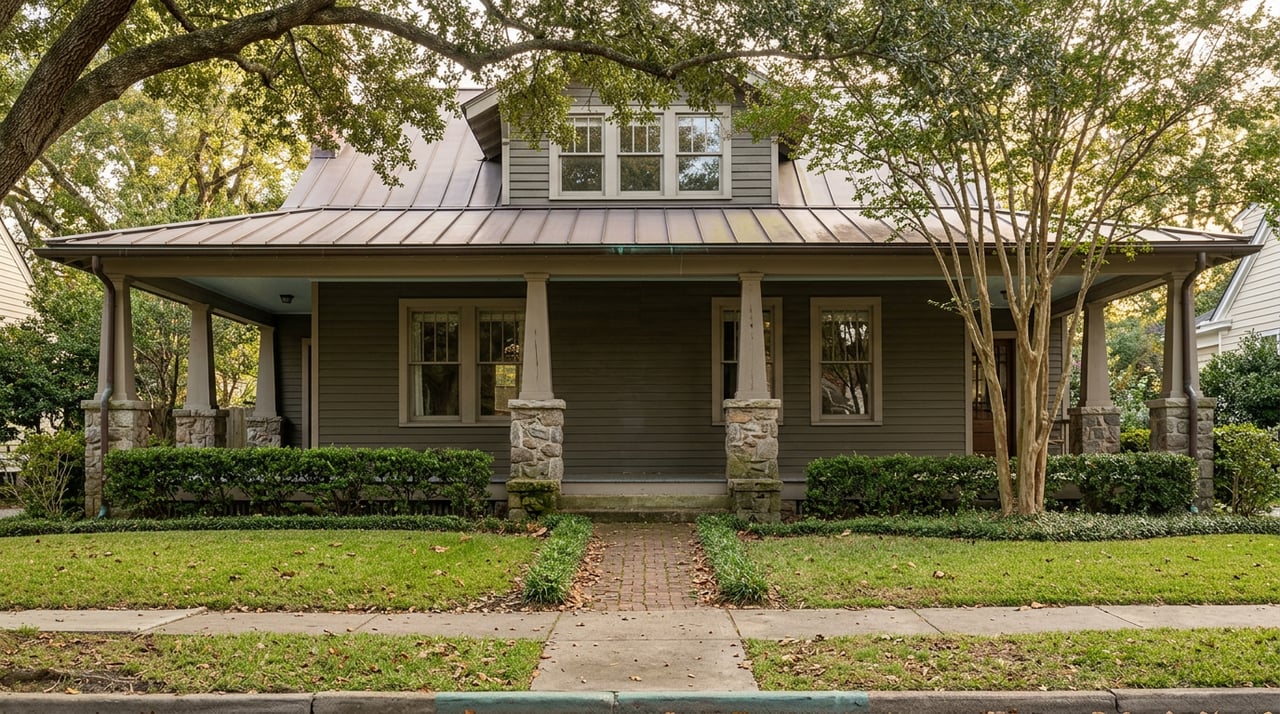
One Fort Worth couple did everything a careful buyer is supposed to do. They got their plans approved. A city-certified inspector signed off. They broke ground on a new house along Mistletoe Drive, in one of Fort Worth's older, tree-lined pockets along the Clear Fork of the Trinity River, and kept building. By the time a stop-work order arrived in November 2025, they had close to $2 million in construction sunk into the ground. The front wall sat closer to the street than the code allowed, a mistake nobody caught until neighbors noticed the framing going up and reported it.
That single sentence is the whole thesis of this piece. In Fort Worth's older neighborhoods, the thing that actually catches buyers off guard isn't the age of the house. It's the assumption that a signed permit, a passed inspection, or a Certificate of Appropriateness means the paper trail is finished. It often isn't.
What Actually Went Wrong on Mistletoe Drive
The couple's plans had already cleared Fort Worth's review process before the first shovel went in. A city-certified inspector approved the design as code-compliant. What slipped through was the setback, the required distance between the front wall and the street. Fort Worth's development services department leans on a third-party inspection program to handle the volume of residential reviews it can't get to in-house, and that's the layer where this one fell apart.
The couple paused construction for roughly three months while they scrambled toward a fix, at one point facing the possibility of tearing the frame down and starting over at a cost north of $1 million. A hearing before the Board of Adjustment in January 2026 resolved it: the board approved a variance 10-0, with one member, Jim Whitten, abstaining because he felt the architect and builder who made the original error should have absorbed the cost themselves. The house is finished now, standing on what the Fort Worth Report described as a row of established homes overlooking the river.
One neighbor lives close enough that the new build's proximity became a personal issue rather than an abstract zoning question. At its closest point the house sits six feet from her property line. She spent over $12,000 planting the largest tree she could afford, hoping to rebuild the privacy she'd lost, and said she plans to plant another. Another neighbor put the broader complaint plainly: the house is too large for the lot it sits on.
None of this happened because Fort Worth's rules are unusually strict. It happened because the system built to catch problems before they get expensive missed one, and the fix arrived after nearly $2 million was already in the ground.
The City Is Now Changing How It Checks Its Own Work
Fort Worth's response wasn't cosmetic. Assistant development services director Evan Roberts presented the case to City Council at a work session in March 2026, and by spring the city had moved to require what's called a stakeout inspection on every project, not just the ones builders volunteer for. A stakeout inspection means a builder marks the actual corners of the foundation with stakes and an inspector checks them against the approved plans before concrete gets poured. The couple had opted out of one. A separate inspection, also appears to have been skipped before framing began.
The city is also weighing a real financial consequence for builders who skip required inspections going forward, a proposed fee of $200 an hour for city staff time spent reviewing an engineer's report after the fact. As one city official told the Fort Worth Report, none of the new paperwork works if an inspector still misses the problem on site. That's the honest version of what this policy change admits: process alone doesn't guarantee compliance, and buyers who assume a passed inspection means the boundaries are locked in should ask more questions before they close, not fewer.
If you're buying new construction or a substantial addition anywhere near Fort Worth's older, denser blocks, that's the practical takeaway. Ask whether a stakeout inspection was actually performed and documented, not just scheduled. Ask to see the surveyed setback, not just the plan drawing. A permit history that looks complete on paper is not the same thing as a project that was checked at every stage it should have been.
The Second Kind of Paperwork: What You're Allowed to Change After You Own It
Separate from construction permitting, Fort Worth's historic districts carry their own legal layer that has nothing to do with inspections and everything to do with what a new owner is allowed to do once they hold the deed. The Fairmount/Southside Historic District, listed on the National Register since 1990, falls under the city's Historic and Cultural Landmarks Commission, which has operated since 1981 and holds real authority over exterior changes to designated properties.
Two designation levels matter here, and they carry different weight:
| Designation | What it means for an owner |
|---|---|
| Historic and Cultural Landmark (HC) | Any exterior work, from windows to additions, needs a Certificate of Appropriateness before a permit is issued |
| Highly Significant Endangered (HSE) | Same review process as HC, with more scrutiny |
This is the part that surprises buyers who fall in love with a Fairmount bungalow expecting to gut a kitchen or swap in modern windows the way they would in a newer subdivision. Under the city's historic preservation program, a Certificate of Appropriateness has to be reviewed and approved before that exterior work can begin. Fairmount's own design standards and guidelines spell out specifics down to window style, and applications only get heard once a month, on the second Monday, with submissions due the third Monday of the prior month. That's a real timeline cost for anyone planning a renovation on a tight schedule.
Demolishing a contributing structure in a designated district can also trigger a delay of up to 180 days while the commission determines the building's significance, a protection written directly into the city's historic preservation ordinance. That delay isn't a penalty. It exists to give the commission time to weigh in before something irreplaceable comes down. For a buyer, it means confirming a property's designation status before assuming a full teardown-and-rebuild is even an option on that lot.
The upside deserves equal weight. Texas also runs a state historic preservation tax credit.
Why the Ground Itself Adds Another Layer
Fort Worth sits on expansive Blackland Prairie clay, the kind of soil that swells substantially when it absorbs rain and pulls back hard during dry summer stretches. Homes built before the mid-1990s, common across Fairmount, Ryan Place, and the surrounding historic blocks, often rest on pier and beam foundations or early slab designs that predate the soil engineering standards used in newer construction. That combination of age and soil is exactly why a foundation inspection matters more in these neighborhoods than it does in a subdivision built in the last decade, and why older electrical systems in these same homes, sometimes still wired with knob and tube or fitted with recalled Federal Pacific panels, deserve their own line item in a buyer's inspection scope.
None of this makes these homes a bad buy. It makes the option period the single most useful tool a buyer has in these blocks, the window where a foundation issue, an outdated panel, or an undocumented permit can surface before it becomes the buyer's problem instead of the seller's.
Common Questions From Buyers Looking at These Neighborhoods
Does historic designation apply to an entire neighborhood or just certain houses? Both structures exist. Fairmount/Southside carries a district-wide National Register listing, while individual properties elsewhere in the city can be designated HC or HSE on their own, independent of their surrounding block.
If you're weighing a historic Fort Worth property, whether you're the one buying character and hoping to update it carefully, or you're the one selling a home that's carried a designation for decades, the paperwork underneath the house matters as much as anything on the inspection report. That's exactly the kind of local detail Nichelle Keithley walks clients through before they write an offer or sign a listing agreement. If you're weighing a move into Fairmount, Ryan Place, or anywhere else in Fort Worth's older blocks, let's connect and go through what your specific property actually allows.